
In 2024, Minnesota deployed more than 800 watercraft inspectors to public boat launches around the state to help staunch the spread of zebra mussels, spiny waterflea, and other aquatic invaders. The goal? Preserve Minnesota’s famed “good life” and protect fishing, tourism, and cultural mainstays such as wild ricing and “up north at the cabin.”

For the past decade, Minnesota has distributed roughly $10 million a year to counties for aquatic invasive species prevention. These funds are used to employ more than 763 watercraft inspectors and also support public education, invasive species management, and early detection / rapid response programs. Additional funds are given to the Minnesota Department of Natural Resources (DNR) and the Minnesota AIS Research Center at the University of Minnesota to fund education and training, research, monitoring, and enforcement programs.
Though AIS remains a daunting challenge, there are some reasons for optimism. One is that we are seeing a decrease in the number of new AIS infestations occurring each year. “We flattened the curve,” says Nick Phelps, director of the Minnesota AIS Research Center. “Fewer lakes are becoming infested every year… and that’s because prevention works.”
The Minnesota DNR also notes that 95% of incoming watercraft arriving at launches in 2024 were in compliance with state laws and 98% were free of plants, invasive animals, mud and water. That’s a major improvement since 2015, when only 86% of watercraft were in compliance with state laws.

Even so, the DNR still reported 41 new AIS infestations in Minnesota lakes and rivers last year.
Among the most problematic aquatic invaders in Minnesota, zebra mussels are perhaps the best known. Native to Eastern Europe and Western Russia, these tiny mollusks adhere to underwater surfaces, including boats, docks, water-intake pipes, and even native freshwater mussels. A female can produce 100,000 to 500,000 eggs per year, and the eggs hatch into microscopic larva, known as veligers, which float through the water and are impossible to see. Their ecological impact can be profound.

“In the years since zebra mussels arrived, the changes in the lake have been impossible to miss,” writes Mike Mosedale about the arrival of zebra mussels in Cass Lake. “Most strikingly, the once green-hued waters have become gin clear, a consequence of the dime-sized filter-feeders’ prodigious capacity to hoover up plankton and reproduce at astonishing rates.” (1/6/25 MinnPost)
Unfortunately, this clear water comes at a cost. First, zebra mussels begin to deposit a silty layer of feces on the bottom of a lake. Then, mercury levels start to climb in fish that live in those lakes.

In a study published in the Science of the Total Environment (December 2024), researchers from the University of Minnesota, Minnesota DNR, and U.S. Geological Survey found that mercury levels were 72% higher in walleye from zebra mussel infested lakes, compared with walleye from uninvaded lakes. In perch, mercury levels were 157% higher!
If you love lakes and spending time outdoors, there are a few ways you can help to prevent the spread of AIS this summer.
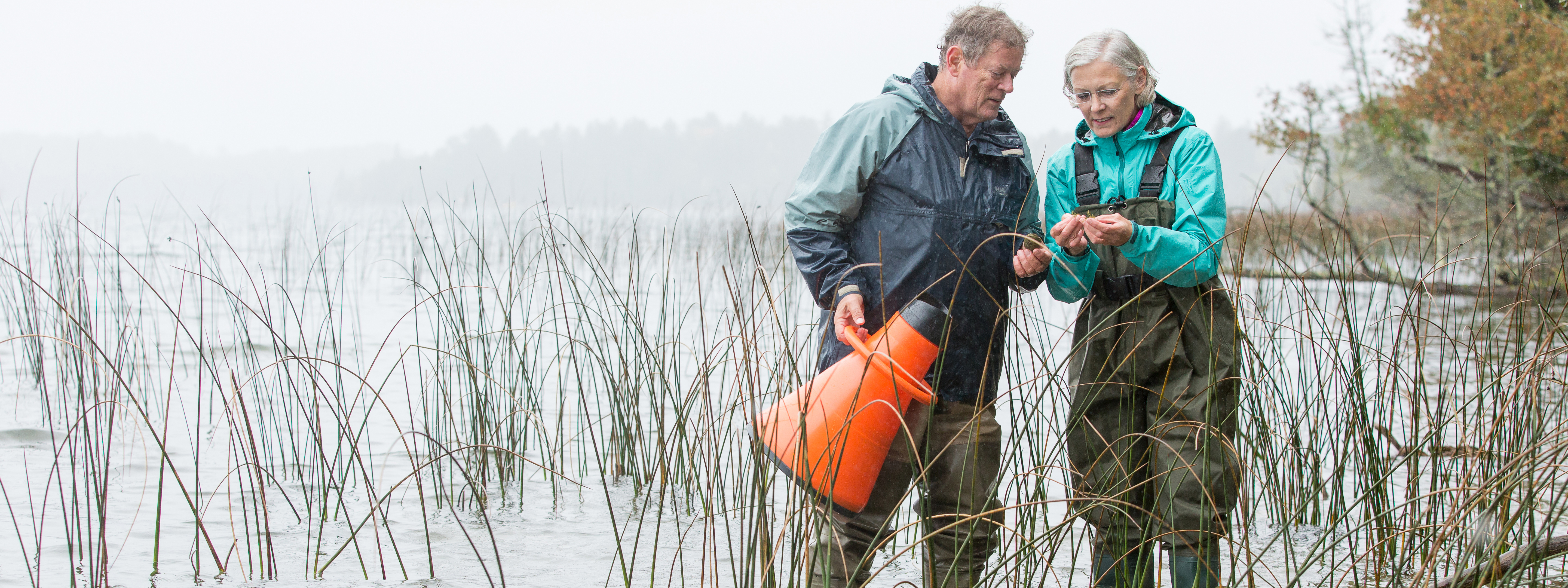
One is to become a certified AIS Detector by participating in a volunteer training taught by University of Minnesota: https://maisrc.umn.edu/detectors-core. The course consists of two portions: a self-paced online course (approx. 8hrs) and a live workshop with instructors, held on June 3 and 4 (1-4pm, online) or June 6 (9am-5pm, in-person at New Brighton Community Center).
The New Brighton workshop is free and open to all, thanks to a sponsorship from the Rice Creek Watershed District. To inquire about scholarships for Washington County residents attending the June 3-4 online workshop, please contact angie.hong@mnwcd.org.
If you’re looking for a smaller time commitment, you can also sign-up for Starry Trek 2025 on Saturday, August 9: https://maisrc.umn.edu/starrytrek. During this one-day event, teams of volunteers scour local lakes to look for starry stonewort, a relatively new invasive algae that is currently found in 30 Minnesota lakes.
Finally, know and follow state laws for fishing, boating, and other water-related activities. Only hire Minnesota DNR permitted lake service providers to install and remove docks and be sure to dry docks, lifts, and rafts for 21 days before moving them from one waterbody to another. If you’re heading out on the water, clean watercraft, trailers, gear, and equipment to remove aquatic plants and prohibited invasive species. Drain all water and leave drain plugs out during transport. Dispose of unwanted bait in the trash, and never release bait, plants, or aquarium pets into lakes, rivers, ponds or wetlands.

 East Metro Water